Spelling practice for Year 6
Spelling is tested separately from grammar and punctuation, and it needs a different kind of practice. Children do not lose spelling marks because they have never seen a word before. They lose them because they cannot retrieve the correct spelling under pressure after a gap. Short, repeated practice on the right patterns, using both past papers and Kidfriendly , builds the retrieval strength that listing and cramming do not.
High-impact spelling patterns
These are the pattern groups that appear most often in the Year 6 spelling test and cause the most avoidable mark loss:
- -ible vs -able endings. Children often default to one form for both. The distinction is not fully rule-governed, which makes it a retrieval problem more than a logic problem. Words like "visible", "possible", "comfortable", and "reasonable" need to be practised until the correct form feels automatic.
- -ough words. The same letter pattern produces different sounds across words like "though", "through", "thorough", "thought", and "enough". Children mix these up because they sound nothing alike despite looking similar.
- Silent letters. Words like "knight", "pneumonia", "psychology", and "gnaw" cannot be spelled by ear. They have to be learned and retrieved from memory.
- Homophones. SATs frequently test homophones in context: affect/effect, practice/practise, stationary/stationery, complement/compliment. The challenge is choosing the right word for the sentence, not just knowing both exist.
- Words from the Year 5/6 statutory list. This is the official set that schools work from, and SATs spelling words draw heavily from it. Many of the hardest words on the list fall into the pattern groups above, but some, like "accommodate", "committee", and "necessary", just need to be learned individually.
- Common prefix and suffix errors. Mis-applying rules for doubling letters, dropping silent e, or changing y to i when adding suffixes. These errors are mechanical and respond well to focused practice.
If your child can spell the statutory list words and handle the -ible/-able, homophone, and silent-letter groups reliably, they will avoid the majority of spelling mark loss.
Spelling practice with Kidfriendly
Kidfriendly is built around the way spelling actually sticks: short retrieval sessions with spaced repetition, not rewriting word lists.
The difference matters. Writing a word correctly five times in a row proves short-term memory, not lasting recall. Spelling it correctly after a gap of two days, then five days, then two weeks, proves the word is genuinely learned. Kidfriendly manages that spacing automatically.
Each session is designed to target one spelling pattern at a time:
- 5-to-10-minute sessions focused on a single pattern group,
- immediate feedback that corrects errors before they become ingrained,
- spaced repetition that brings back weaker words after a gap, so retrieval strength builds over time.
Kidfriendly tracks spelling progress separately from grammar and punctuation. This means you can see whether spelling is genuinely the area costing marks or whether your child's time is better spent on grammar or punctuation instead. An estimated SATs score and experimental SAT-day projection give you a sense of where spelling stands relative to the rest of the GPS assessment.
Start free spelling practice with Kidfriendly →
Spelling practice on paper
Spelling is tested in Paper 2 of the SATs GPS assessment. It is a dictation test: the teacher reads 20 sentences aloud, each with one missing word, and your child writes the missing word. The test takes around 15 minutes and is worth 20 marks. There is no multiple-choice element and no context clues beyond the sentence itself.
This format means spelling practice needs to include hearing a word in a sentence and writing it from memory, not just reading and recognising correct spellings. That is what makes past papers particularly useful for spelling: they mirror the exact test experience.
Use past papers to:
- practise the dictation format (read the sentence aloud, pause, let your child write the word),
- identify which pattern groups are causing the most errors,
- build familiarity with the test pacing and the level of word difficulty.
You do not need to do a full paper every time. Working through the 20 spelling words from a single paper is a focused session in itself. Early on, review the answers together and group the errors by pattern: was it a suffix problem, a homophone mix-up, or a word they had simply never practised? That grouping step turns a score into a plan.
Papers and mark schemes are available at KS2 SPaG papers.
How to use papers and Kidfriendly together
A practical routine that works well:
Use Kidfriendly for regular spelling sessions. Short daily practice builds retrieval strength on the weakest patterns. Because spelling is a memory task more than a comprehension task, frequency matters more than session length.
Every 1 to 2 weeks, try the spelling words from a past paper. Read the sentences aloud in dictation format. This tests whether retrieval holds up when the words come without warning, in an unfamiliar sentence, with no second attempt.
Use paper results to guide Kidfriendly focus. If a paper shows your child losing marks on homophones or -ible/-able words, focus Kidfriendly sessions there. Papers reveal which patterns are still fragile; Kidfriendly builds the repetition needed to make them solid.
Build spelling recall through short pattern-based repetition
Kidfriendly keeps spelling practice bite-sized and consistent, so tricky patterns get revisited often enough to stick without turning revision into a fight.
- pattern-led spelling practice instead of random lists
- short daily sessions that feel manageable
- clear feedback on which words and rules still wobble
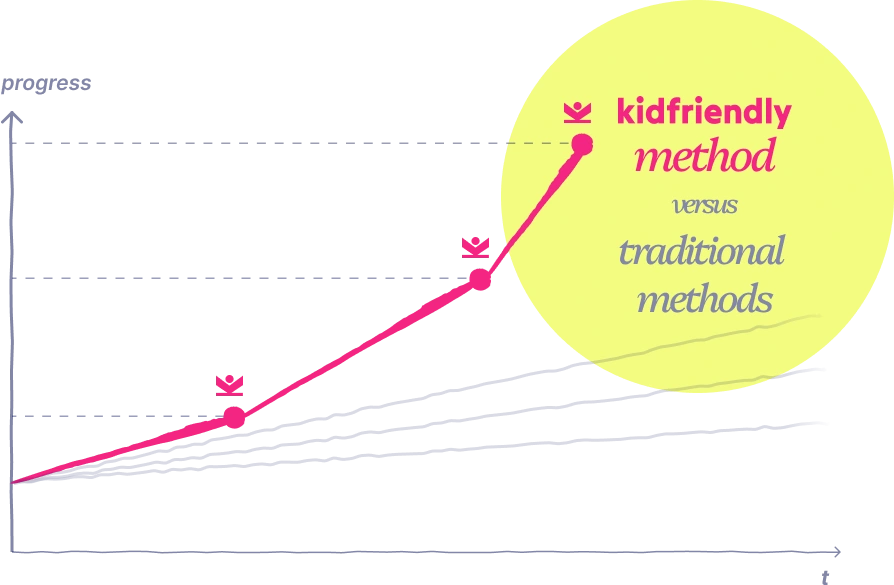
Learn more about the Kidfriendly method here.
FREE READINESS ESTIMATE
Get a free SATs readiness estimate
Use the Kidfriendly app to get a free SATs readiness estimate based on in-app practice. It helps parents and guardians see whether progress is building over time and what to focus on next.
