How to estimate your child’s SATs readiness
A useful SATs readiness estimate tells you where your child stands before the real test, not just what happened on one question set.
There are two practical ways to build that picture. You can use past papers under realistic conditions for a readiness snapshot, or use Kidfriendly to build a running picture over time.
A full paper shows how your child copes with timing, format, and pressure, while short digital practice makes it easier to see whether the same weak pattern keeps coming back.
Use a past paper for a realistic snapshot
If you want the clearest home check, run a recent paper in normal test conditions.
- pick one recent maths, reading, or SPaG paper
- time it properly and keep the room quiet
- avoid helping during the paper
- afterwards, look at the mark scheme and note where marks were lost
Pay attention to three things:
- did your child run out of time
- were marks lost mostly in one area
- did errors come from not knowing, misreading, or rushing
Papers and mark schemes are available at Year 6 SATs past papers.
Use Kidfriendly for the running picture
One paper gives you a snapshot. Kidfriendly helps you build a running picture between papers, especially for grammar, punctuation, and spelling, so you can see whether progress is holding or whether the same weak area is still dragging the estimate down.
It is especially useful when you want to know:
- whether spelling, grammar, or punctuation is consistently the weakest area
- whether the estimate is moving up or staying flat
- whether recent practice is turning into real improvement
Kidfriendly shows an estimated SATs score and an experimental SAT-day projection, so you can see where the current trend is heading.
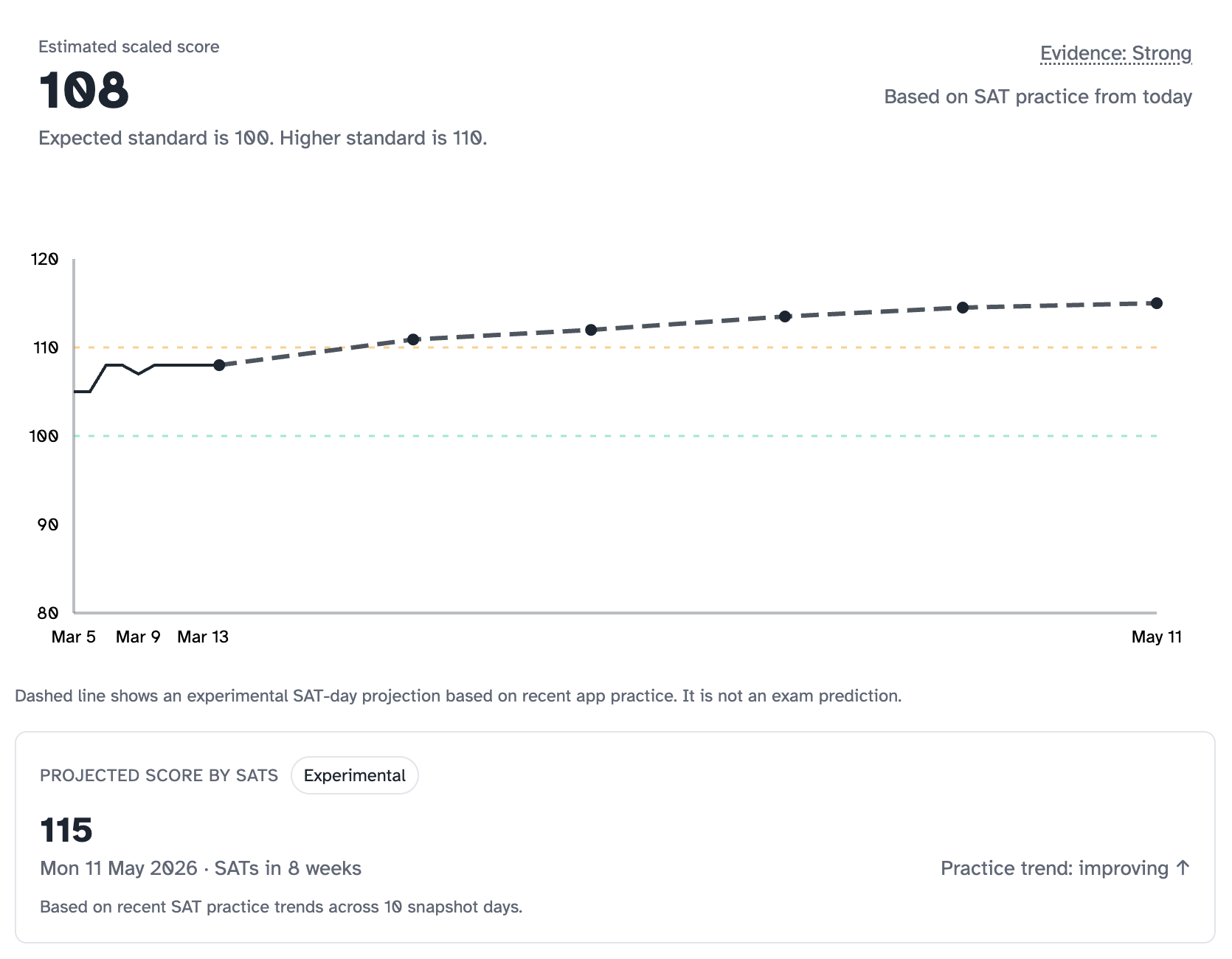
For many families, the best pattern is simple: use a paper every 1 to 2 weeks for the snapshot, and use Kidfriendly between papers for the running picture.
Read the result and choose the next step
A readiness estimate becomes useful when it changes what you do next.
- Timing problem: keep using papers, but practise working steadily under timed conditions.
- One weak area: shift the next block of practice towards that subject or topic.
- Same mistake pattern again: use short targeted practice before trying another full paper.
- Need help interpreting the number itself: start with Year 6 SATs scores explained.
See where your child stands before SATs week
Kidfriendly turns short practice sessions into a clearer readiness picture, so you can see what is getting stronger and what still needs attention.
- a readiness estimate shaped by ongoing practice, not a single paper
- subject-level visibility that helps parents choose the next step
- short SATs sessions that are easier to repeat than full papers
Learn more about the Kidfriendly method here.